
A boy in safety goggles with a smudged face looks up in wonder at a kitchen table covered in a homemade volcano, flasks and wires spoon of sugar

A spark of curiosity goes a long way.

We help museums and brands get more from their exhibition budget, with playful, interactive experiences that get the message across and show measurable impact.
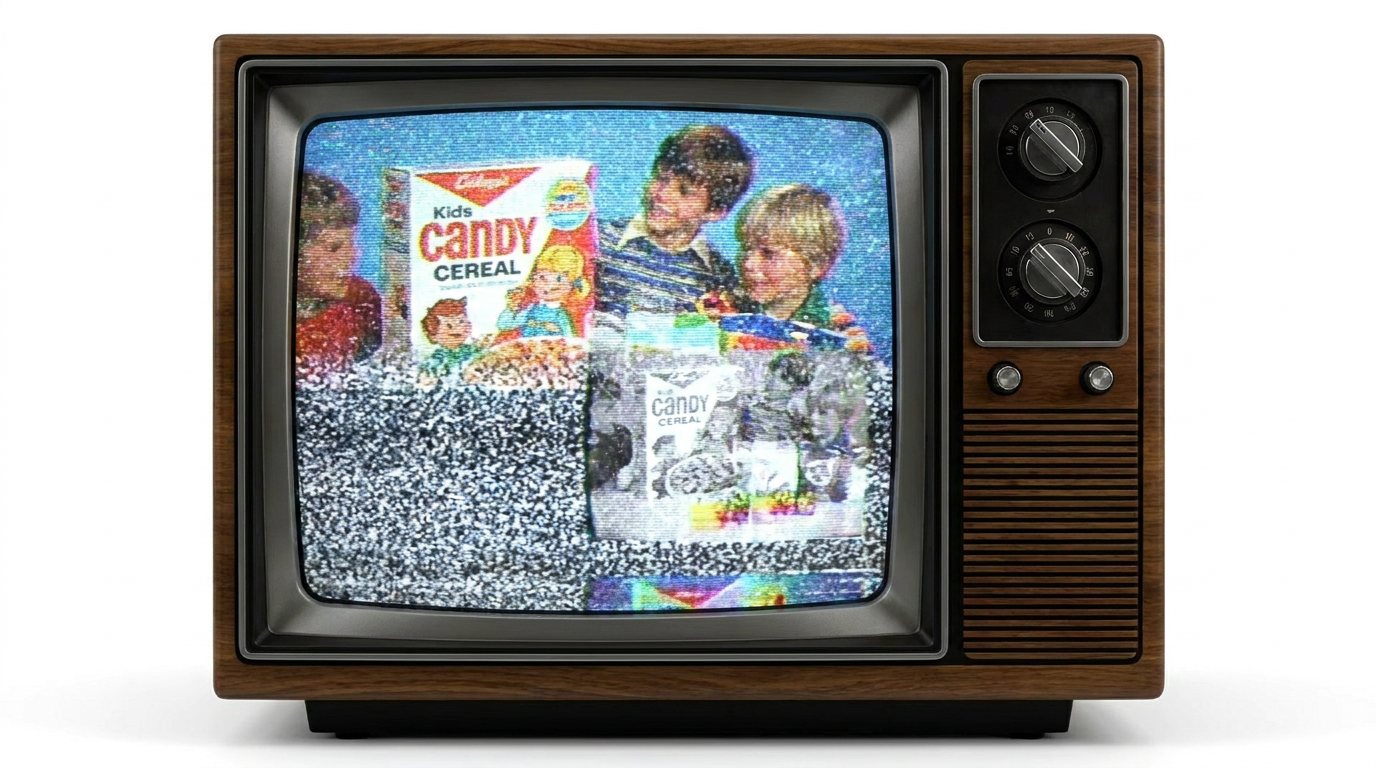
A vintage wood-panel television showing a static-covered advert for Kids Candy Cereal

The world is competing
for attention.

Kids spend more hours scrolling than exploring. Algorithms are designed to keep them passive, predictable, and indoors. We believe childhood deserves better: real discovery, real connection, real life.

Young people already spend 70% less time with friends in person than they did twenty years ago. U.S. Surgeon General, 2023

Common Sense Media, 20247h 22m

average daily screen time for teens 13–18

TIMELY, 20261 in 3

by age 14 had high addictive social media use. By 11, about 30% already showed signs.

KUTEST KIDS, 202652%

want to reduce screen time, but 46% don't know how

Our method

Play 4 Education

Four everyday ideas about how play actually works, each grounded in research on informal and museum-based learning.

Play captures

Hands-on settings build interest in science in ways school alone does not.

Play embodies

Kids learn best when they can explore with their hands and bodies, not just watch.

Play connects

Families and friends learn together when the experience invites them in.

Play stays

Game-based exhibits produce learning that lasts beyond the visit.

Explore the method

We are Non Profit

Playful learning is our passion and our mission. We believe great exhibits should be within reach of every museum and every story.

The best hands-on science experiences don't reach every kid equally. We've built a model that helps change that.

Our approach

Play 4 Education

Our answer is simple: put real, hands-on play back into kids' lives, on purpose. Not a lecture about screens, and not more screen time. A genuine alternative that's more interesting than a feed.

Play 4 Education is a framework of four mechanics, each grounded in existing research on informal and museum-based learning. Evidence strength varies by pillar, and we say so plainly.

Strong evidence

Play captures

Informal settings like museums, hands-on programmes and everyday exploration measurably build people's science knowledge and interest in ways formal schooling alone does not. NRC, 2009 A study across 17 science centres in 13 countries linked science centre visits to higher adult science literacy. Falk et al., 2016 In 2026 the National Academies took stock of the field and called for sharper evidence. NASEM, 2026

Strong evidence

Play embodies

Physically experiencing a concept, rather than watching it, improves science understanding and activates the brain's sensorimotor systems. Kontra et al., 2015 A meta-analysis of 17 studies with almost 3,900 children found guided play boosts early maths skills more than direct instruction. Skene et al., 2022

Working hypothesis

Play connects

Families talk more and more deeply about STEM when exhibits invite them to build and play together. Pagano et al., 2019 Open, shared exhibit designs let children and several family members play side by side. Reimer & Moreno, 2024 Intergenerational play-learning is still a younger research area and less robustly measured. Kanhadilok & Watts, 2014 We're testing this pillar directly.

Direct evidence

Play stays

A meta-analysis of 34 studies found game-based learning improves retention (g = 0.59) compared to non-game instruction. Hu et al., 2022 Children who told stories about their tinkering remembered the most about the experience weeks later. Pagano et al., 2024 A museum pilot of a game-based exhibit found significant, measurable knowledge gains alongside high engagement. Rowe et al., 2017

What we do

We deliver Play 4 Education two ways.

We build

Interactive exhibits, concept to opening day

Interactive exhibits and playful experiences for museums, exhibition partners and storytellers, built with a network of strong partners in creative tech and experience design.

We consult

Workshops, play audits, testing and impact

We run workshops and play audits, test with real visitors and measure the impact. Every idea is planned for the biggest reach per budget spend, from pop-up modules to travelling versions.

As a non-profit, we keep both within reach of small institutions, kids clubs and community spaces too.

What guides our design

Education as Entertainment

We turn the world's stories (nature, history, culture) into interactive and playful exhibits. Working with museums and storytellers, we create experiences that are accessible, engaging, and unforgettable.

Interactivity as our key

Through interactivity and play, we create lasting connections to exploration. Whether through movement, gamification, or hands-on discovery, we engage body and mind together, turning abstract concepts into memorable, experiential learning.

We speak science and tech

Rooted in both research and creative technology, we combine the two through a human-first, inclusive design language, enabling journeys that go beyond the expected.

See how we'll measure it.

Our theory of change sets out the outcomes we track for each pillar and how we'll build the evidence as we grow.

Theory of change
Research sources
  1. National Research Council (2009). Learning Science in Informal Environments: People, Places, and Pursuits. National Academies Press.
  2. Falk, J.H., Dierking, L.D., Swanger, L.P., Staus, N. et al. (2016). Correlating science center use with adult science literacy: An international, cross-institutional study. Science Education, 100(5).
  3. National Academies of Sciences, Engineering, and Medicine (2026). The Status of Informal Science and Engineering Education: Proceedings of a Convocation.
  4. Kontra, C., Lyons, D.J., Fischer, S.M. & Beilock, S.L. (2015). Physical experience enhances science learning. Psychological Science, 26(6).
  5. Skene, K., O'Farrelly, C., Byrne, E.M., Kirby, N., Stevens, E.C. & Ramchandani, P.G. (2022). Can guidance during play enhance children's learning and development in educational contexts? A systematic review and meta-analysis. Child Development, 93(4).
  6. Pagano, L.C., Haden, C.A., Uttal, D.H. & Cohen, T. (2019). Conversational reflections about tinkering experiences in a children's museum. Science Education, 103(6).
  7. Reimer, P.N. & Moreno, C. (2024). Invitations to play: designing for family engagement through STEAM exhibits in community settings. Frontiers in Computer Science, 6.
  8. Kanhadilok, P. & Watts, M. (2014). Adult play-learning: Observing informal family education at a science museum. Studies in the Education of Adults, 46(1).
  9. Hu, Y., Gallagher, T., Wouters, P., van der Schaaf, M. & Kester, L. (2022). Game-based learning has good chemistry with chemistry education: A three-level meta-analysis. Journal of Research in Science Teaching, 59(9).
  10. Pagano, L.C., George, S., Uttal, D.H. & Haden, C.A. (2024). “You gotta tell the camera”: Advancing children's engineering learning opportunities through tinkering and digital storytelling. Child Development, 95(5).
  11. Rowe, J.P., Lobene, E.V., Mott, B.W. & Lester, J.C. (2017). Play in the museum: Design and development of a game-based learning exhibit for informal science education. International Journal of Gaming and Computer-Mediated Simulations, 9(3).
  12. Oishi, S. & Westgate, E.C. (2022). A psychologically rich life: Beyond happiness and meaning.
  13. Oishi, S. et al. (2019). The Psychologically Rich Life Questionnaire.
  14. U.S. Surgeon General (2023). Our Epidemic of Loneliness and Isolation, as reported by PBS News.
  15. Screen-time figures: Common Sense Media (2024), TIMELY (2026), Kutest Kids (2026).

For partners & museums

Exhibits visitors stay for. Results you can measure.

Museums, science centres and companies commission us for exhibits with measurable impact, from concept to opening day, or as consulting for what you already have. Every exhibit is designed from day one to travel or go digital, so its impact reaches far beyond opening day.

For museums & science centres

Turn a collection into something kids can play with.

  • Interactive exhibits built around nature, history and culture
  • Hands-on, movement-based and gamified formats
  • Accessible, inclusive design from the first sketch
  • Designed alongside your curators and storytellers
  • The best return on investment and innovation for your institution
  • Designed from day one to travel or go digital, extending your outreach
For companies

Put your purpose in front of the next generation.

  • Science and tech experiences that reflect what you stand for
  • A travelling or digital version that tours community spaces and multiplies your reach
  • Impact stories you can share with your team and community
  • A team backed by an ever-growing network of creative tech studios and partners

Two ways to work with us

Build something new, or make what you have more playful.

We build

Concept to opening day

Interactive exhibits and playful experiences for museums, exhibition partners and storytellers, grounded in our Play 4 Education method.

We consult

Play audits and co-design sprints

Play audits, co-design sprints and concept development for museums, science centres, kids clubs and learning spaces that aren't starting from scratch.

Every project comes with clear outcome measures, so you can see what it changed for your visitors. How we measure

Why it matters

Every impact story we create brings the next partner through the door.

Invest & fund

Help playful learning grow.

We're industry professionals: tech enthusiasts and experience designers who build solutions that fit our values, happiness and education. Our aim is to change the world of education by giving kids, and all people, real alternatives to TikTok and social media: multi-sensory, tactile ways to connect and explore in the real world.

We work with an ever-growing network of creative tech studios and partners. We make sure every bit of funding gets where it should, and that our partners, museums and science centres, get the best return and the most innovative work.

The opportunity

A real need, and a model to meet it.

The need

Kids want an alternative

52% of kids want to reduce their screen time, but 46% don't know how (KUTEST KIDS, 2026). Playful, hands-on discovery gives them somewhere better to go.

The model

Built to scale

Every exhibit is designed from day one to travel or go digital, so its impact reaches far beyond opening day, into schools, kids clubs and community spaces that could never host it otherwise.

The team

Experienced professionals

Tech enthusiasts and experience designers, backed by an ever-growing network of creative tech studios and partners. We design through a human-first, inclusive design language.

What your support makes possible

Fuel for the next stage.

  • Grow our design and creative technology team
  • Build flagship experiences that show what playful science can be
  • Take on more partner and museum commissions
  • Widen access for small institutions, kids clubs and community spaces
  • Run our first evaluation pilot with an academic partner, so every claim is backed by evidence
  • Measure and share the impact of every project, so you can see where every bit of funding goes

A spark of curiosity goes a long way. So does yours.

Impact & theory of change

A richer life, not just a fun visit.

Psychologists distinguish being happy from having a rich, interesting life: one full of variety, curiosity and moments that change how you see things. Oishi & Westgate, 2022 We think screens are quietly stealing that second kind of life from kids, not just their time.

The problem

Kids are spending more time with screens than with the world.

U.S. Surgeon General, 202370%

less time with friends in person than young people spent twenty years ago

Common Sense Media, 20247h 22m

average daily screen time for teens 13–18

TIMELY, 2026~30%

of children show signs of social media addiction by age 11

Kutest Kids, 202652%

of teens want to reduce screen time, but 46% don't know how

Theory of change

From screen time to a richer life.

Problem

Screens crowd out curiosity, variety and real-world connection.

Solution

Real, hands-on play put back into kids' lives, on purpose: Play 4 Education.

Activities

We build interactive exhibits and consult with museums, science centres and learning spaces.

Outcomes

Engagement, understanding, connection and learning that lasts.

PillarWhat changesHow we'd know
Play capturesVisitors choose to engage rather than pass byDwell time and engagement rate at the exhibit vs. baseline
Play embodiesVisitors can explain the concept afterwards, not just recall itShort pre/post knowledge check
Play connectsFamilies and groups interact with each other, not just the exhibitObserved co-play and conversation rate
Play staysLearning persists after the visitDelayed recall check 2–4 weeks after the visit, where partners allow
Ultimate impactKids and families build a more varied, curious, psychologically rich lifeItems from the validated Psychological Richness Scale Oishi et al., 2019, given to caregivers after repeat visits

Each row needs baseline data we don't have yet. That's the point of our evaluation plan, not a gap to paper over.

Evaluation plan

Building our own evidence as we scale.

1

Baseline first

One upcoming exhibit or consulting project becomes the pilot. We run short pre/post checks and observations, with no new hires.

2

One academic partner

A learning-sciences or developmental-psychology researcher helps design the instruments and interpret the findings.

3

Publish small, publish often

A short write-up per pilot, shared directly with partners and funders, before aiming for peer-reviewed journals.

4

Fund it as its own line

Evaluation gets its own modest budget, so evidence grows alongside every project.

Are you a learning-sciences researcher?

We're looking for one academic partner to co-design our evaluation. Let's talk.

Get in touch

About

A spark of curiosity goes a long way.

Spoon of Sugar is a non-profit of industry professionals: tech enthusiasts and experience designers working with an ever-growing network of creative tech studios and partners. We design multi-sensory, hands-on experiences that help kids, and all people, connect and explore in the real world.

Happiness and education

We build solutions that fit our values. Play should make kids happier and smarter at the same time.

Real-world alternatives

We want to give kids, and all people, more alternatives to TikTok and social media: multi-sensory, tactile ways to connect and explore.

Every euro where it should be

We work with an ever-growing network of creative tech studios and partners, and make sure funding gets where it should, so our partners get the best return and innovation.

Want to make something together?

Let's talk

Write to us at info@spoonofsugar.org or use the form below.

Legal

Imprint

Spoon of Sugar gGmbH
Moltkestr. 27A
50674 Köln
Deutschland

Managing director: Marissa Fries
Commercial register: Amtsgericht Köln, HRB 126235

Email: info@spoonofsugar.org